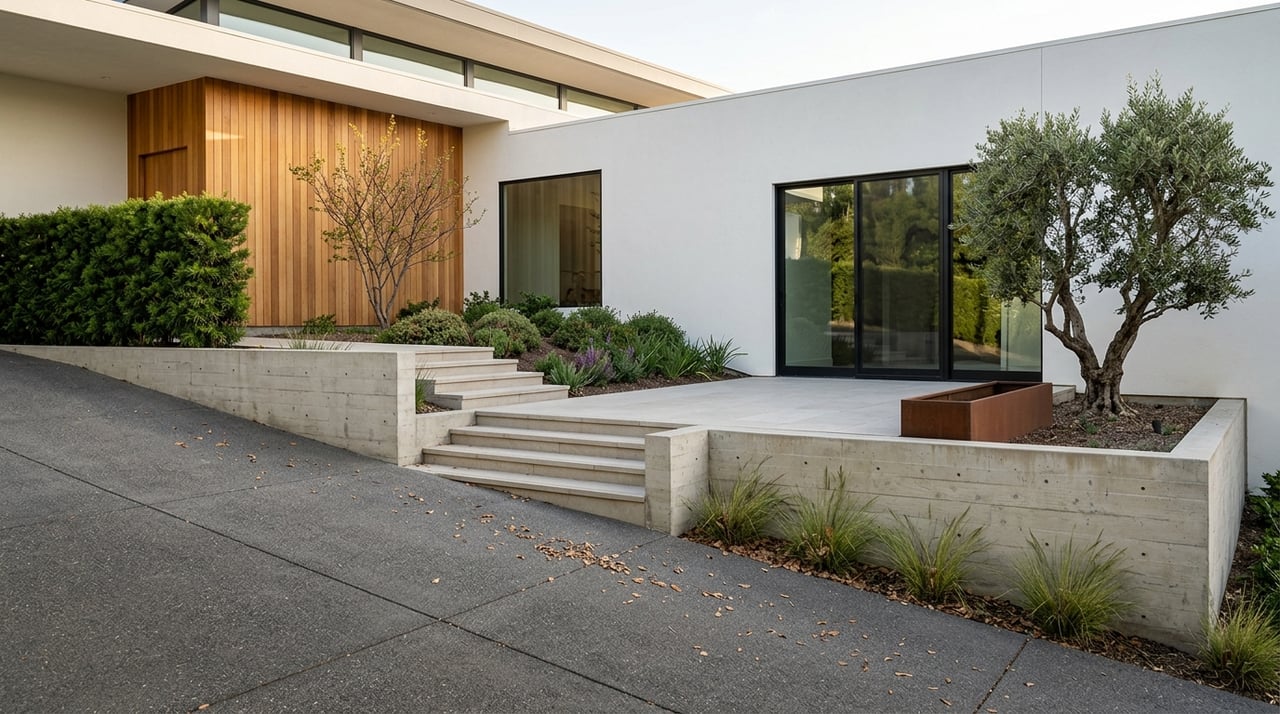
If you are buying or selling in Los Altos Hills, the house is only part of the story. Here, lot features can shape value just as much as square footage because topography, access, easements, and local rules all affect what a property can support. When you understand how to read the land, you can make better decisions about pricing, offers, renovation plans, and long-term potential. Let’s dive in.
Why lot features matter in Los Altos Hills
Los Altos Hills is not a market where one acre always equals one acre of usable value. The Town preserves its semi-rural hillside character through one-acre minimum parcels, large setbacks, and height limits, and those rules directly affect what can be built on a site.
In the R-A district, the minimum lot area is 43,560 square feet. Setbacks are generally 40 feet in the front and 30 feet on the sides and rear, and structures are generally limited to 27 feet in height, with primary homes allowed up to 32 feet when extra setbacks are provided. That means the shape, slope, and layout of a parcel can matter just as much as the raw lot size.
The Town also uses slope-based formulas to regulate maximum development area, called MDA, and maximum floor area, called MFA. On paper, two parcels may look similar in acreage, but if one has more usable, flatter ground, it may have a much larger practical building envelope.
Flat area often drives value
Buildable land matters more than total acreage
One of the biggest drivers of lot value in Los Altos Hills is how much of the parcel is actually usable. A large lot with steep slopes, long driveway requirements, or heavy hardscape constraints may offer less flexibility than a smaller parcel with a broad, contiguous building area.
Town rules make that especially important. Development area is measured on a horizontal plane, and it can include patios, decks, walkways, pools, tennis courts, the first 100 feet of driveway, and some added driveway width. In other words, site improvements compete for capacity.
Slope affects both design and cost
The Town’s grading policy requires grading, excavation, or fill to be kept to the minimum needed. On slopes over 14 percent, homes must use step-on-contour, daylight, or pole foundations, which can add complexity to design and construction.
That does not mean every sloped lot is less valuable. In Los Altos Hills, some hillside sites deliver privacy, views, and a strong finished product. But value depends on the balance between engineering demands and the quality of the end result.
Views and privacy can add value
Scenic appeal is not just aesthetic
Views are a major draw in Los Altos Hills, but they are tied closely to local siting rules. Town code says structures should remain unobtrusive from off-site, preserve scenic views, and avoid dominating the natural landscape, with ridgelines and hilltops preserved.
This matters when you evaluate a so-called view lot. A beautiful setting can support strong appeal, but the actual home placement and buildable area still need to fit within local standards.
Privacy often comes from the land itself
In many markets, privacy is created with walls, fences, or landscaping. In Los Altos Hills, privacy is often shaped by the landform, setbacks, and easements that preserve open space and separation.
Open-space or conservation easements may be required over oak coverage, creek areas, and slopes of 30 percent or more. In some cases, those limits reduce the building envelope, but they can also help protect natural surroundings, views, and a sense of retreat that buyers value.
Access can change both usability and cost
Driveway layout is more important than it looks
Access is not just about getting to the house. It can influence grading, development cost, and day-to-day ease of use.
Town subdivision rules require safe vehicular access from a public or private road by private or common driveway. Driveways should follow the path of least topographical resistance, and common driveways may be required when they reduce grading.
That means a lot with straightforward access can be easier to improve than one that needs a long or challenging driveway. Since driveway area can also count toward development limits, access design can affect both budget and site capacity.
Road type and egress deserve a closer look
When a listing mentions a private road, it is worth reviewing how access works and what obligations may come with it. The Town maintains a public and private street inventory and requires encroachment permits for work in the public right-of-way or public easements.
Wildfire planning also matters. The Town identifies wildfire as one of its primary threats, and project conditions may require fire sprinklers or a hydrant, so access and evacuation considerations are part of the value equation.
Future potential can raise or limit value
ADU potential may strengthen a parcel
For many buyers and owners, future flexibility matters. In Los Altos Hills, one ADU and or one JADU is allowed on any property with an existing single-family house in the R-A district, and a new ADU can be up to 800 square feet beyond the lot’s MDA and MFA.
Detached ADUs are generally limited to 16 feet in height and must keep a 40-foot front setback and 4-foot side and rear setbacks. They must also use common driveway access from the nearest public or private street, and the Town asks for a geotechnical report at the pre-application stage.
SB 9 may affect how buyers read land value
SB 9 can also change how a parcel is evaluated. In Los Altos Hills, qualifying parcels can be split into two lots, each at least 1,200 square feet and roughly equal in size, and the resulting parcels may support up to two units each under objective standards.
That does not mean every lot is an easy candidate. A parcel still has to work with access, easements, topography, and usable area, so future potential should always be tested against the actual site conditions.
Hidden project conditions affect redevelopment math
Raw land value is only one part of the picture
A lot may look attractive at first glance, but project conditions can materially affect what it costs to improve or expand. Standard conditions can include a landscape plan, open-space easement, pathway fees or easements, grading and erosion-control plans, underground utilities, and repair of any road or driveway damage.
Other possible requirements include height and location certification by a civil engineer or surveyor, sewer connection if the property is within 200 feet of a sewer line, fire sprinklers or a hydrant, and GreenPoint rating minimums. These items can shift the economics of a teardown, addition, or custom build.
Pathway fees deserve attention
Los Altos Hills has more than 86 miles of pathways connecting neighborhoods to open space, and redevelopment can trigger pathway easements or fees. The current pathway development impact fee is $5.49 per square foot for qualifying new single-family residences, additions, and barns or stables over 900 square feet.
That means a parcel with apparent expansion room may still carry added redevelopment costs. For sellers, this can influence how buyers underwrite an offer. For buyers, it can affect the real cost of a future project.
How to read listing language more carefully
Marketing terms need verification
In Los Altos Hills, listing language can sound simple while the underlying site analysis is not. Terms like view lot, private road, buildable pad, or future potential should be tested against Town rules and parcel-specific constraints.
A view lot should be checked against siting and ridgeline rules. A buildable pad should be matched to MDA, MFA, slope conditions, and driveway counting rules. Future potential should be reviewed in light of ADU rules, SB 9 standards, access, and easement limits.
Parcel maps are a starting point
The Santa Clara County Assessor provides online access to APNs, parcel maps, assessed value, property address, and other property information. But the Assessor also notes that indicated sales price can differ from assessed value, so those records should be treated as a starting point, not the final word on value.
For a more useful lot review, you want to confirm net acreage, the required 160-foot building circle, lot width and depth, topographic contours, driveway alignment, road or easement access, septic or sewer constraints, and any conservation or open-space easements.
What buyers and sellers should focus on
If you are buying
Look beyond the headline lot size and ask how the site actually functions. A smart review should include:
- Usable flat area
- Slope and likely foundation type
- Driveway length and access conditions
- Easements or open-space restrictions
- ADU or SB 9 feasibility
- Likely project conditions and redevelopment costs
The highest-value parcel is often not the largest one. It is usually the lot that combines efficient access, strong siting, usable area, and fewer entitlement hurdles.
If you are selling
Your lot may offer value that buyers cannot see from photos alone. If your property has a favorable building envelope, efficient access, preserved views, or meaningful future flexibility, those details should be understood and presented clearly.
This is especially true in Los Altos Hills, where technical site factors can separate one seemingly similar property from another. A thoughtful valuation should account for what the parcel can realistically support, not just what it looks like at a glance.
In a market as nuanced as Los Altos Hills, lot value is rarely just about acreage. It is about how topography, access, privacy, rules, and future potential come together on a specific site. If you want help evaluating how your lot features may affect pricing, marketability, or improvement potential, connect with the Moussavian Real Estate Team.
FAQs
How does slope affect home value in Los Altos Hills?
- Slope can affect buildable area, grading needs, foundation type, driveway design, and overall project cost, which can change how buyers value a property.
What does buildable area mean for a Los Altos Hills lot?
- Buildable area refers to the portion of the site that can realistically support development within Town rules, including limits tied to slope, setbacks, access, and counted hardscape.
Can an ADU increase property value in Los Altos Hills?
- It can add flexibility and future use potential, but the site still needs to meet local setback, height, access, and process requirements.
What should buyers check on a private road in Los Altos Hills?
- Buyers should confirm access details, road layout, and any obligations or permit issues that could affect daily use or future redevelopment.
Are bigger lots always worth more in Los Altos Hills?
- No. Two lots with similar acreage can have different value depending on usable flat area, slope, access, easements, and entitlement complexity.