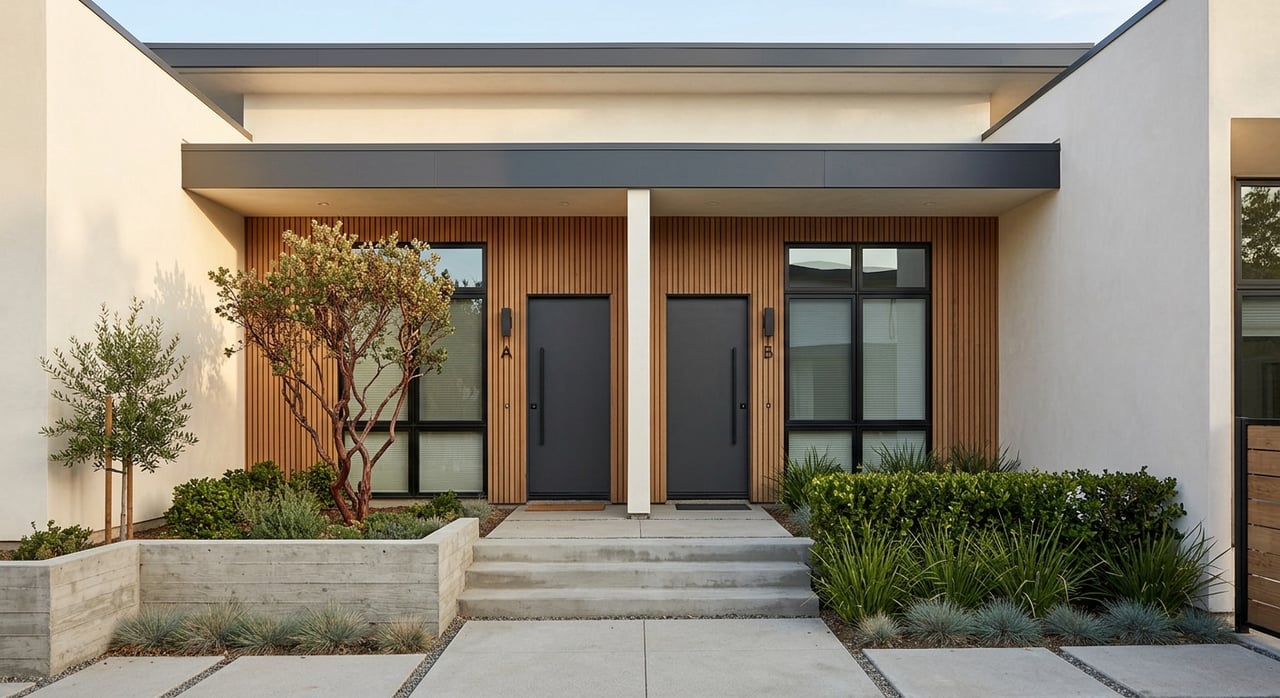
Buying your first home in Sunnyvale can feel like aiming for a moving target. Prices are high, inventory can shift quickly, and the choice between a condo and a townhome is not always as simple as it looks from the curb. If you want a clearer way to compare your options, this guide will walk you through how Sunnyvale condos and townhomes work, what they typically offer, and which questions matter most before you make an offer. Let’s dive in.
Why attached homes matter in Sunnyvale
If you are searching for a first home in Sunnyvale, attached housing is likely to be part of your plan. In the city’s 2025-2030 Consolidated Plan, about 58% of Sunnyvale housing units are in attached or multifamily forms, including one-unit attached homes and larger multifamily buildings.
That matters because attached homes are a major part of the local housing supply, not a niche category. In a high-cost market like Sunnyvale, condos and townhomes often serve as the most realistic entry point for first-time buyers who want to own in the city.
The pricing gap helps show why. In February 2026, Sunnyvale condos and townhomes had a median sold price of $1,461,200, while the citywide single-family median was $2,675,000. That does not make attached homes inexpensive, but it does make them the main lower-entry option within Sunnyvale.
Sunnyvale demand stays strong
Sunnyvale’s housing demand is closely tied to its job base and commute access. The city’s major employers include Google, Apple, Amazon, Intuitive Surgical, Lockheed Martin Space Systems, Walmart, Meta Platforms, Synopsys, Applied Materials, and LinkedIn.
The city also identifies professional, scientific, management, and information sectors as major parts of the local economy, with manufacturing also playing a large role. For many buyers, that means living closer to work, transit, or both can shape the home search just as much as square footage.
Transit access adds another layer. Caltrain’s Sunnyvale station connects to VTA routes 20, 21, 53, 55, and Rapid 523, and VTA light rail serves stations including Borregas, Crossman, Fair Oaks, Lockheed Martin, Moffett Park, Reamwood, and Vienna. Areas near downtown Sunnyvale, Lawrence Station, north Sunnyvale, and the Moffett Park corridor often stand out because they let buyers weigh commute time, home size, and monthly HOA costs together.
Condo vs townhome in California
One of the most important things first-time buyers can learn is that condo and townhome do not always describe the same thing. In California, a condominium is a legal form of ownership, while a townhome is usually an architectural style.
That means two homes that look very similar might be owned very differently. One may be legally a condominium, while another may be in a planned development or another type of common-interest development. You should confirm the legal ownership form by reviewing the title report and HOA documents rather than relying on the exterior design alone.
This can affect what you actually own and what the HOA controls. In a condo, you usually own the unit plus an undivided interest in the common area. Spaces that feel private, such as patios, balconies, driveways, or parking areas, may still be exclusive-use common area governed by the project documents.
What ownership details mean for you
For a first-time buyer, legal structure is not just technical fine print. It can influence maintenance responsibilities, insurance needs, future costs, and even how you use parts of the property.
In some planned developments, the HOA may own or maintain shared elements like private streets and common landscaping. In other communities, the division of responsibility may look different. That is why a careful document review matters before you get too far into the process.
This is also where working with a detail-oriented advisor can help. If a home has a private deck, attached garage, front porch, or driveway, you want to know whether those features are fully deeded to you or managed under the project’s common-area rules.
What Sunnyvale condos look like today
Many buyers still picture condos as smaller, single-level units in larger buildings. In Sunnyvale, that is not always the case, especially in newer communities.
A current example is The Square in 94089, a new-construction condo community with just 13 homes. Its plans range from about 1,174 to 1,804 square feet, with 2- to 3-bedroom layouts and some plans offering up to 3 bedrooms and 4 baths.
One current example there is a 2-bed, 3-bath home with 1,543 square feet and a private deck. That kind of layout shows how today’s condo-style homes in Sunnyvale can feel more substantial and flexible than many first-time buyers expect.
What Sunnyvale townhomes often offer
Townhomes in Sunnyvale often trade a higher price point for more space and a more house-like layout. They are commonly multi-level, with open living areas, attached garages, and room that can work for guests, storage, or hybrid work.
The Vale is one example. It is a 200-townhome community made up of three neighborhoods, with floor plans from 1,194 to 2,014 square feet, open living spaces, eat-in kitchens, private porches and decks, and shared amenities such as a corner park and community center.
Classics at Lawrence Station is another useful reference point, with three-level homes, open-concept layouts, 3-bed-plus-den or 4-bed options, and attached 2-car garages. Terraces at The Station offers 2- to 4-bedroom layouts, roughly 1,700 to 2,400 square feet, and shared amenities like a clubhouse, playground, dog park, and walking paths.
Condo or townhome: key trade-offs
For many first-time buyers, the choice comes down to a few practical trade-offs rather than labels alone.
| Feature | Condo-style home | Townhome-style home |
|---|---|---|
| Typical size trend | Often smaller | Often larger |
| Layout | May be compact or multi-level | Often multi-level and more house-like |
| Outdoor space | Often deck, balcony, or small patio | Often porch, deck, or limited private outdoor area |
| Garage/storage | Varies by project | More likely to include attached garage |
| Shared amenities | Common in many projects | Also common in larger communities |
| Entry price | Often lower than townhomes | Often higher, with more space |
In Sunnyvale, condo-style homes often skew smaller, while townhomes usually buy you more square footage, garage utility, and sometimes more flexible living space. Both can still be strong first-home options, especially if your top priorities are location and long-term ownership.
HOA questions first-time buyers should ask
HOA review is one of the biggest parts of buying an attached home in California. The Davis-Stirling Common Interest Development Act governs California HOAs, and both the California Attorney General and the Department of Real Estate stress the importance of reviewing HOA rules, budgets, and reserve information.
That is especially important because HOA dues are an added monthly cost on top of your mortgage, property taxes, and insurance. Dues and assessments can also rise over time, so you want to understand both the current budget and the longer-term financial picture.
Here are smart questions to ask early:
- How much of the HOA fee goes to day-to-day common-area maintenance?
- How much goes into reserves for future repairs and replacement?
- Are there any known or pending special assessments?
- What repairs are the HOA responsible for, and what falls on you?
- Are there use rules for balconies, patios, parking, pets, or rentals?
- Is this a newer community or an older conversion that may carry higher repair risk?
Older conversion projects can require closer scrutiny. The California Department of Real Estate notes that some conversion communities may have higher maintenance or rehabilitation needs than buyers first expect.
Location questions matter as much as price
In Sunnyvale, your commute and daily routine can shape your ownership experience as much as the home itself. A great floor plan may lose some appeal if it adds major travel time, while a smaller home in the right location may support your workweek better.
When you compare attached homes, think beyond the list price. Consider how close the property is to Caltrain or VTA light rail, whether major commute routes like 101, 280, or 85 are convenient, and how the location fits your weekly routine.
CityLine’s downtown district highlights direct access to Caltrain and adjacent access to Highways 101, 280, and 85. For many first-time buyers, that kind of connectivity is a major reason attached homes remain in demand.
How to evaluate floor plan fit
Your first home needs to work for real life, not just a showing. In Sunnyvale’s attached-home market, that often means being honest about how much flexibility you need from the layout.
A smaller condo may work well if you value lower upkeep and a simpler footprint. A larger townhome may make more sense if you want room for hybrid work, frequent guests, storage, or a two-car garage.
As you tour homes, focus on questions like these:
- Can one room double as a home office?
- Is there enough storage for everyday life?
- Do the stairs work for your routine?
- Is the kitchen and living area laid out for how you actually spend time at home?
- Do outdoor spaces feel usable, even if they are limited?
These practical checks often help more than the condo-versus-townhome label alone.
A smart first-time buying approach
In Sunnyvale, the best attached-home choice is often the one that balances legal structure, HOA scope, and commute location. Those three variables usually tell you more than the marketing language in the listing.
A first-time buyer can benefit from a clear review process:
- Confirm whether the home is legally a condo or another common-interest form.
- Review what you own versus what the HOA controls.
- Study dues, reserves, and any assessment risk.
- Compare floor plan utility for work, guests, and storage.
- Weigh commute access to Caltrain, VTA, and major job centers.
- Consider whether the community is newer construction or an older conversion.
That process can help you compare homes more confidently, even when they look similar online.
If you are planning your first purchase in Sunnyvale, a careful, data-driven approach can help you avoid surprises and focus on the homes that truly fit your budget and lifestyle. If you want help evaluating condo and townhome options with an eye on ownership structure, property condition, and local market context, connect with the Moussavian Real Estate Team.
FAQs
What makes Sunnyvale condos and townhomes attractive for first-time buyers?
- Sunnyvale attached homes often offer a lower entry point than single-family homes, while still giving you access to major employers, transit, and established residential communities.
What is the difference between a Sunnyvale condo and a Sunnyvale townhome?
- In California, a condo is a legal ownership structure, while a townhome usually describes the building style, so you should verify the legal form in the title and HOA documents.
What should first-time buyers review in a Sunnyvale HOA?
- You should review HOA dues, reserve funding, maintenance responsibilities, rules, and any risk of future assessments before moving forward.
Are Sunnyvale townhomes usually bigger than Sunnyvale condos?
- In many current Sunnyvale examples, townhomes tend to offer more square footage, more house-like layouts, and features like attached garages, while condo-style homes often skew smaller.
Why does transit matter when buying a condo or townhome in Sunnyvale?
- Transit access matters because many buyers want easier connections to Caltrain, VTA, and major commute routes, which can make certain Sunnyvale locations especially competitive.
Should first-time buyers worry about older Sunnyvale conversion projects?
- Older conversion projects deserve careful review because maintenance needs and the chance of future repair costs or assessments may be higher than in some newer communities.